THE STROKE
Lift and thrust together
Birds' wings generate both lift and thrust, acting as a cross between a wing and a propeller by pushing air both down and backwards.
Up and down strokes doodleflappy
00THE SCIENCE OF FLAPPING FLIGHT
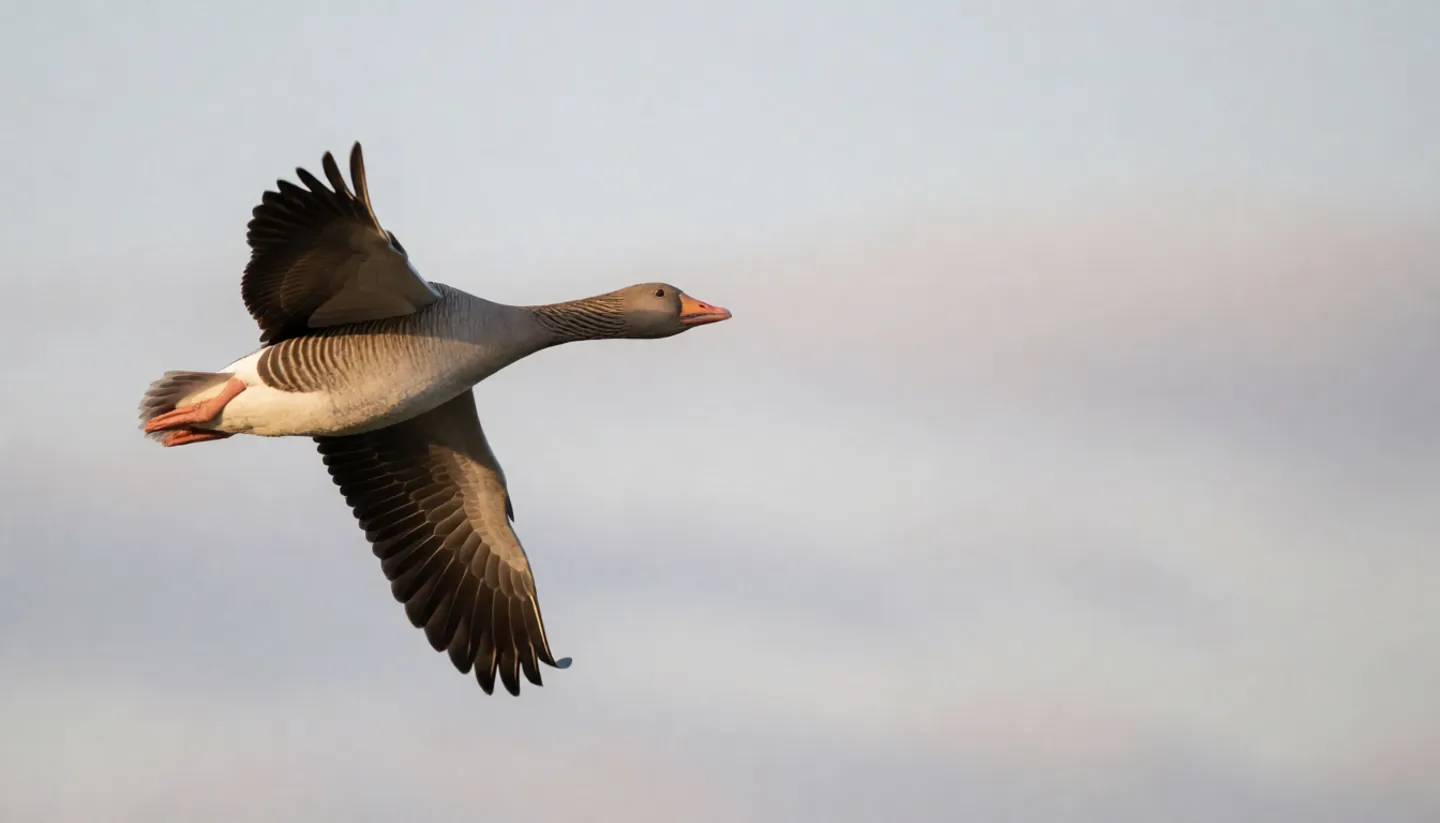
An aeroplane's wing only lifts. A bird's wing has to push as well.
Birds make both lift and thrust with the same flapping wings, mostly on the downstroke. Then each species adds its own rhythm: steady beats, bouncing bursts, glides between flaps, or hovering. This independent guide explains what flight researchers have found.
Spot a flight style01Principles
02THE SHORT ANSWER
A wing makes force by moving air.
Birds steer that force with the angle of each stroke.
THE STROKE
Birds' wings generate both lift and thrust, acting as a cross between a wing and a propeller by pushing air both down and backwards.
Up and down strokesBOUNDING
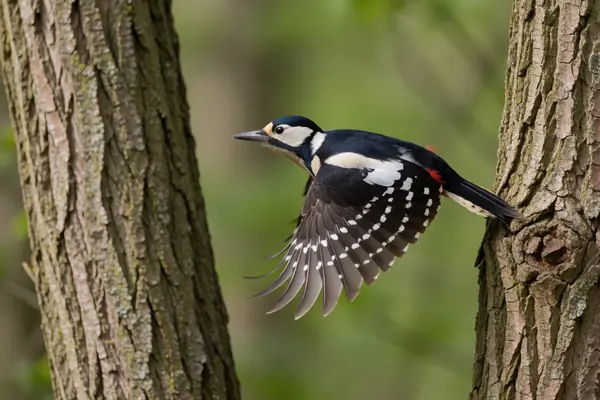
Many small birds flap in bursts, then fold their wings tight against the body. Researchers find bounding only in birds up to about 300 g.
Compare stylesHOVERING
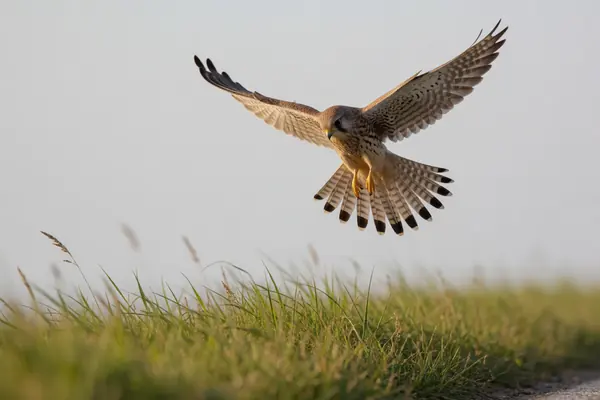
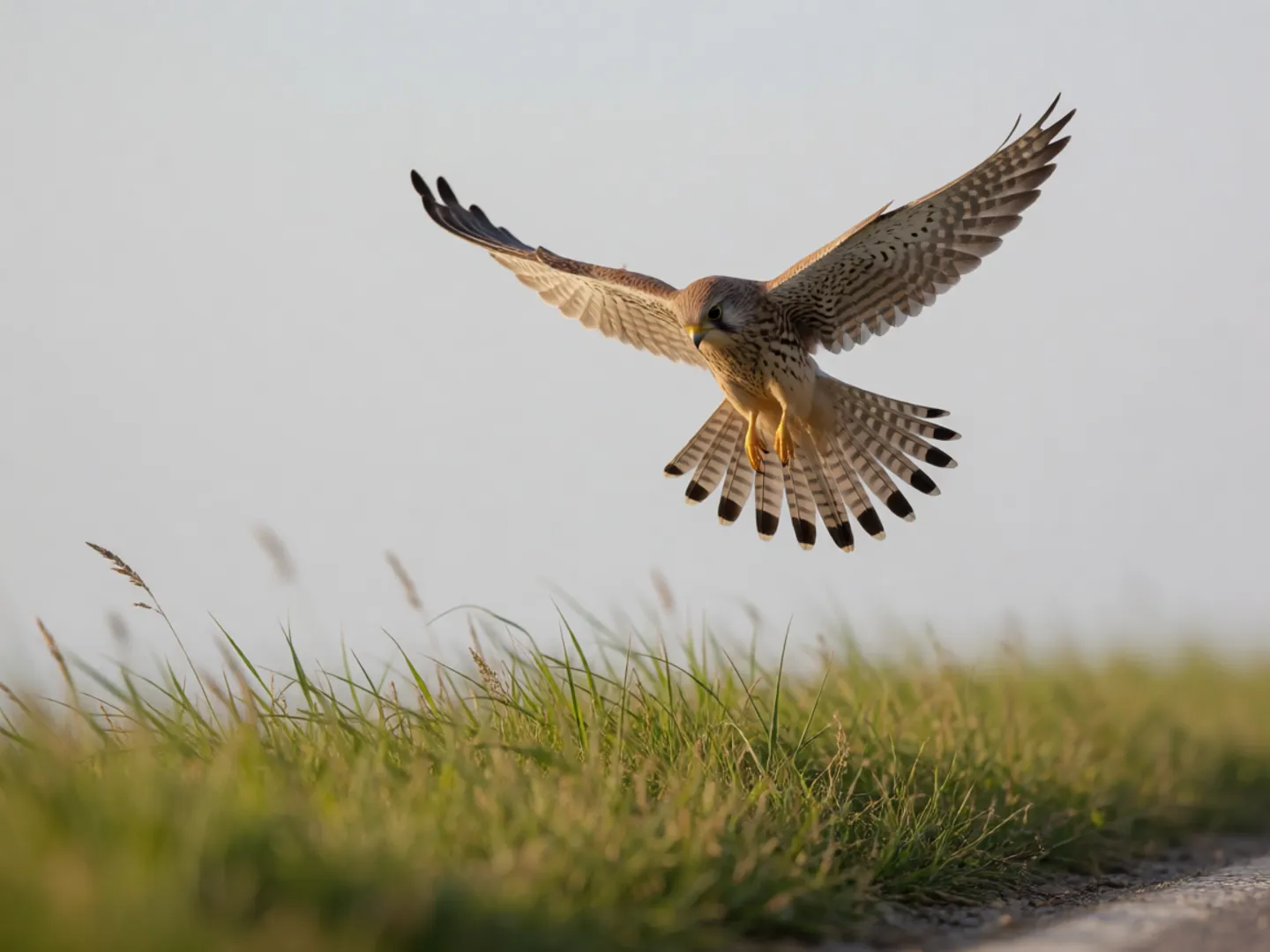
Hummingbirds are the only birds that can sustain hovering. Kestrels hover too, keeping the head still while tail and wings hold position.
See the numbers03A QUICK FLIGHT CHECK
Pick a kind of bird to see the flight style researchers describe for it. The bar shows roughly how much of the time the wings are flapping rather than folded or held out to glide.
Based on Usherwood (2016, Royal Veterinary College), Tobalske (2010) and RSPB species pages. Styles vary with speed, and some birds switch between them.
04TWO NUMBERS WORTH KNOWING
Two findings from flight research
on bounding and on hovering.
≈ 0.3 kg
Upper size limit for bounding
There is an upper size limit for the ability to bound of about 0.3 kg. Little owls and most woodpeckers sit at the larger end; budgerigars, wagtails and finches are much smaller.
BOUNDING · TOBALSKE 2010
3× more
Hummingbird lift, downstroke vs upstroke
Hummingbirds generate three times more lift during the downstroke than the upstroke, the difference coming from wing twist on the way up.
HOVERING · TOBALSKE 2010
Usherwood's 2016 analysis argues bounding and flap-gliding are not the most aerodynamically economical way to fly, and may instead reduce the physiological cost of using flight muscles.
05FOUR THINGS TO WATCH FOR
Next time you are outdoors, try naming the flight style before you name the bird. Each of these is described by researchers or the RSPB.
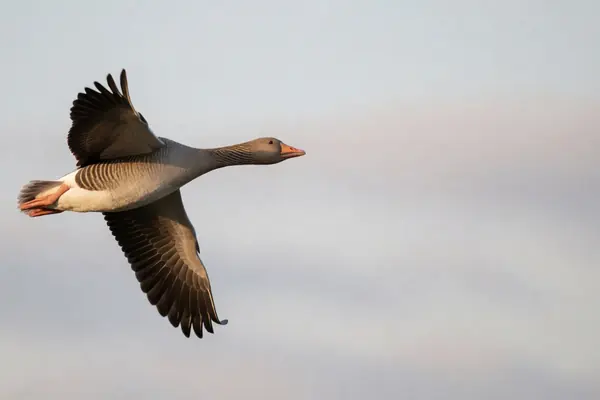
Geese and swans flap continuously in cruising flight, wings outstretched and working at low amplitude.
Bursts of flaps then a dip with folded wings suggest a small bird bounding, such as a woodpecker or finch.
Glides on spread wings between flaps are typical of many birds of prey, and of starlings and swallows.
A bird holding position with its head fixed over a roadside verge may well be a kestrel; the RSPB says hovering is its most characteristic behaviour.
06UP AND DOWN
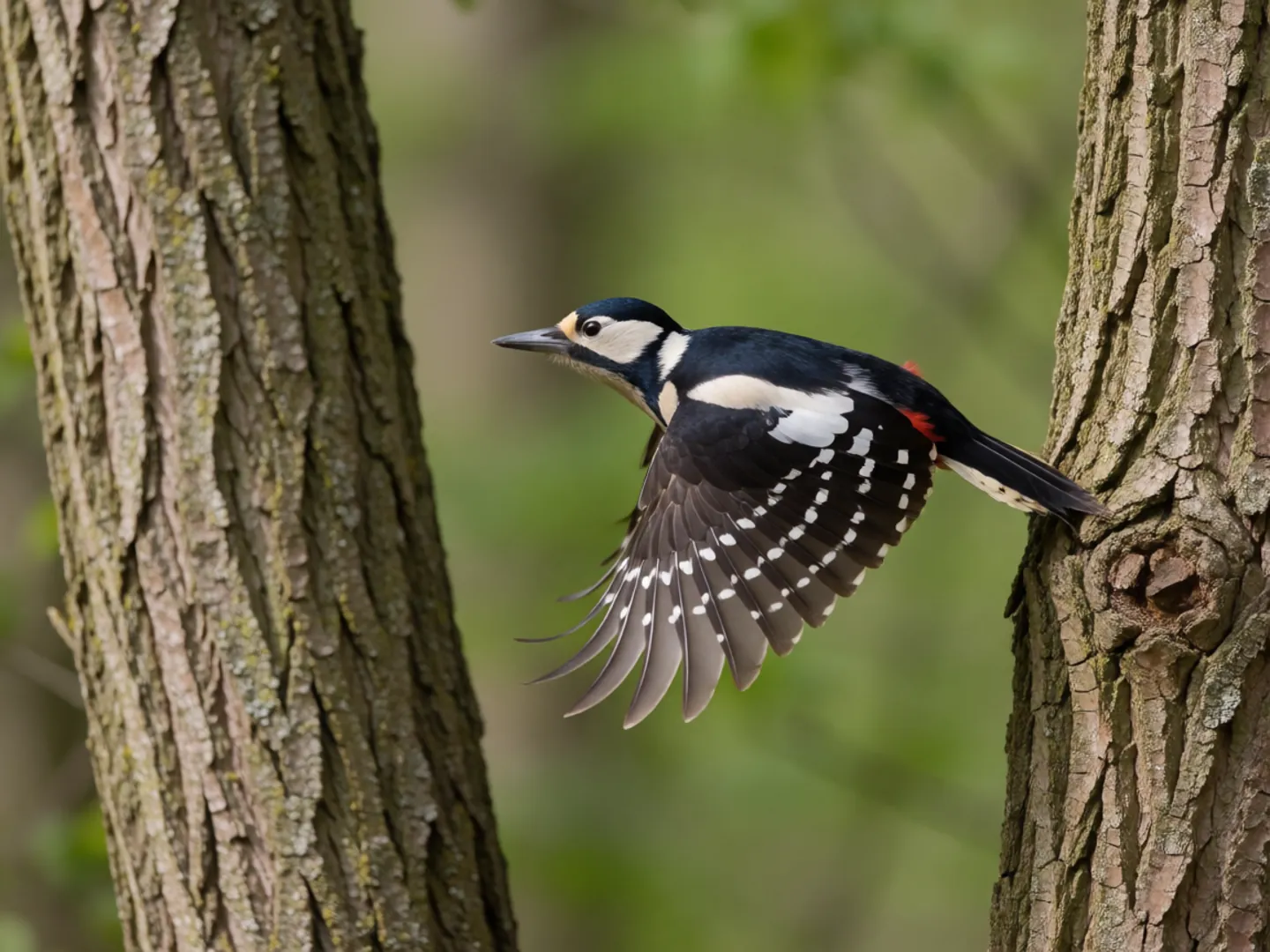
Most of the work happens on the downstroke. To fly slowly, birds keep the stroke fairly shallow; to beat drag at speed, they tilt the stroke steeper and twist the wing more, turning more of the force into thrust.
On the upstroke at low speed, many birds fold their wings in towards the body, because a lifting upstroke there would create a lot of drag. At higher speeds many fold less and get some lift on the way up. Hummingbirds turn their wings over on the upstroke so it can help support their weight.
07Questions
To make both lift and thrust. A wing makes force by pushing air: pushing it down gives lift and pushing it back gives thrust. Birds' wings do both at once, acting as a cross between a wing and a propeller, mostly on the downstroke.
It depends on size. A zebra finch flaps at about 28 beats a second, each downstroke lasting roughly 0.02 seconds, while the pileated woodpecker, a big woodpecker that barely bounds at all, flaps about 5 times a second. Usherwood's 2016 analysis links those short, fast downstrokes in small birds to their bounding flight.
They use flap-bounding: bursts of rapid flapping followed by bounds with the wings folded. Research suggests it saves energy at faster speeds, and there is an upper size limit of about 0.3 kg for bounding.
Mostly to avoid drag on the upstroke, and in small birds to bound between bursts of flapping. On the upstroke at low speed, many birds fold their wings in towards the body, because a lifting upstroke there would create a lot of drag; at higher speeds many fold less and get some lift on the way up. Small birds such as finches and woodpeckers also fold their wings tight against the body between bursts of flapping, a style called flap-bounding that researchers find only in birds up to about 0.3 kg.
Flap-gliding is thought to be less costly than continuous flapping at most speeds. It is characteristic of many birds of prey, though geese and swans flap continuously unless landing.
Hummingbirds are the only birds that can sustain hovering, thanks to small size, high wingbeat frequency and massive flight muscles. Kestrels are known for hovering over verges while hunting.
No. It is an independent guide to the science of bird flight. The name is used only in its everyday sense of flapping wings.
08Sources
ABOUT THIS NAME
doodleflappy.com is part of the DoodleSale portfolio. It isn't in an auction right now, but you can ask about leasing it.